

Tinkoola Red Light Mask Review 2026: Is It Worth the Hype?
Red light masks feel like a beauty shortcut. You sit down. You press a button. You hope your skin looks smoother next week. That sounds fun. It also sounds risky if the mask is weak, heavy, or annoying to use.
So I tested the hype angle and the shopper angle for 2026. I looked at the main Tinkoola options that are live on Amazon right now, plus what smart buyers compare them to.
I will keep this simple. I will keep this friendly. And I will tell you who should buy it, and who should skip it.
In a nutshell
- Tinkoola offers a strong value setup for face and neck if you want a single device that feels easy and home friendly, and you do not want luxury pricing. You get the mask format that many people will actually use consistently.
- Look for the wavelength combo before you click Buy. Some Tinkoola listings highlight 630nm and 830nm, and some emphasize 850nm near infrared plus mode options. Your results depend on that detail, so you should match it to your goal. Fine lines and texture often pair well with red plus near infrared use.
- Comfort and fit matter as much as LEDs. A mask that pinches your nose or presses your eyes will sit in a drawer. Tinkoola models often market home use and travel use, so the comfort story is part of the product promise.
- Your schedule decides your outcome. You need routine use. You should plan short sessions on set days. You should take phone photos in the same lighting. Skin changes are slow, so your tracking must stay calm and simple.
- If you have melasma or you react to light easily, you should be cautious. You should patch test. You should start with fewer sessions. You should also avoid adding strong actives on the same night if your skin is sensitive.
- Alternatives exist at different price levels. If you want a more famous brand, you can pay more. If you want cheaper, you can go generic. Tinkoola sits in the middle for many shoppers.

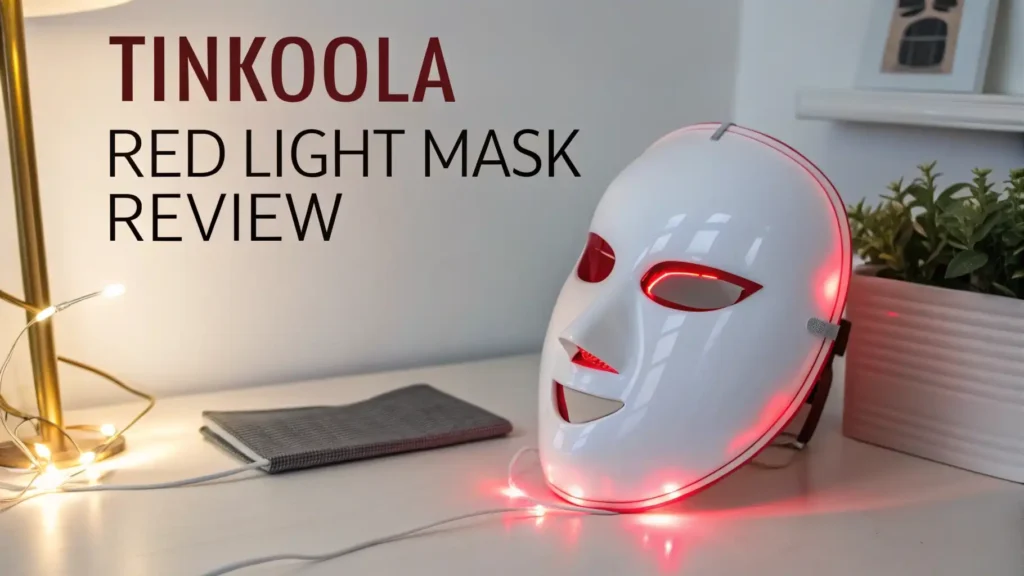
What the Tinkoola Red Light Mask is, in plain terms
A Tinkoola red light mask is a wearable LED device that shines light on your face, and sometimes your neck too. You wear it for short sessions at home. You do not need a clinic visit. You do not need needles. You just need patience.
Many Tinkoola listings on Amazon focus on red light and near infrared light. Some listings call out 630nm and 830nm wavelengths. Other listings mention 850nm near infrared. That matters because different wavelengths sit at different depths.
Red light often targets surface level skin tone and texture. Near infrared often targets deeper support and comfort feel. You want both if your goal is a broader anti aging plan.
Tinkoola Red Light Therapy Mask for Face and Neck (White Gold) overview
This is the listing that grabs attention because it sells the full set idea. You get face coverage and neck coverage in one system. That is important because many people treat the jawline and neck as the real age tell zone.
The product page positions it as home friendly and travel friendly. That tone matters because it suggests simple use. You charge it. You wear it. You keep going. For a lot of buyers, simplicity beats fancy features because it leads to repeat use.
If you want one Tinkoola mask to start with in 2026, this is the most direct pick because it is marketed as a face and neck solution, not only face. That makes it easier to justify the spend because it replaces two devices for many routines.
Tinkoola Red Light Therapy Mask for Face and Neck (Blush) overview

This option tracks closely with the face and neck idea, but it comes in a different color style. Color sounds cosmetic, but it can matter. A mask that looks nicer often feels less medical. A mask that feels less medical gets used more.
The key point is still function. You want consistent coverage. You want easy charging. You want a fit that does not slide when you sit upright. If you plan to use it while you read or scroll, you want a stable feel.
This is a good pick if you want the face plus neck format, but you also care about the look of the device on your dresser. That small emotional win can keep you consistent for weeks.
Tinkoola Red Light Therapy for Face (630nm and 830nm) Dark version

This version reads like a more focused face device. The product title calls out 630nm and 830nm. That is a clear spec that many shoppers want because it is easy to compare across brands.
If your goal is face only, this may feel more direct. It can also feel easier to store. Many people also prefer face only masks if they already use a neck cream or they dislike neck attachments.
This is also the option that often makes sense for beginners who want to try red light without spending for a full face and neck setup. If you build the habit first, you can upgrade later without regret.
Top 3 Alternative for Tinkoola Red Light Mask


What results can you expect in 2026, and how fast
You should expect gradual change, not instant change. Your skin cells cycle on a schedule. Your collagen response also takes time. So you should think in weeks, not days.
Many users aim for goals like smoother look, calmer tone, and a more rested glow. If you take photos every week, you may notice small changes first around texture and general brightness. Fine lines can take longer.
You also need to control other variables. If you change your cleanser, your serum, and your mask use in the same week, you cannot tell what worked. You should keep your routine stable for at least three to four weeks.
If you want a simple plan, you can do short sessions on fixed days, like Monday, Wednesday, and Friday. Consistency beats intensity.
Specs that matter most: wavelengths, modes, and coverage
Shoppers get distracted by LED counts and buzzwords. You should focus on three things.
First, you should check wavelength callouts. Some Tinkoola listings state 630nm and 830nm. Some emphasize 850nm near infrared. You want a clear statement so you can compare apples to apples.
Second, you should check mode logic. Some masks offer multiple light options. That can help if you want red plus other colors for different skin goals. But extra modes also add complexity. You should pick the mode set you will actually use.
Third, you should check coverage. A face only mask treats the face. A face and neck set treats the full lower face area too. Coverage often decides perceived value more than any single spec.
Comfort, fit, and build: the real make or break points
A red light mask can have great specs and still fail you. It fails when it feels annoying.
You should look for pressure points. You should look for eye comfort. You should look for strap stability. If the mask shifts, you will touch it often, and you will break your calm session.
You should also think about heat. LEDs can warm the surface. A small warmth can feel relaxing. Too much warmth can feel irritating. If you feel discomfort, you should shorten the session and increase slowly.
The best mask is the one you can wear while you do something pleasant, like listening to a podcast. If the mask adds stress, you will stop using it.
How to use the Tinkoola mask for best results
You should start with clean skin. You should remove makeup and sunscreen. You should pat dry.
You should keep your eyes protected if the mask design exposes light near the eye area. If the mask has built in eye coverage, you still should avoid staring at the LEDs.
You should keep your routine simple after the session. A gentle moisturizer works well. If you use strong acids or retinoids, you should separate them if your skin gets irritated easily.
You should also track your use. A simple note on your phone works. You can write session count and skin feel. Simple tracking keeps you honest without making you obsessed.
Who should buy it, and who should skip it
You should buy a Tinkoola red light mask if you want an at home habit and you enjoy simple routines. You should also buy it if you prefer a device you can use while seated at home.
You should skip it if you hate wearing face gear. You should also skip it if you expect instant lifting results. Light therapy supports skin over time, but it does not replace medical treatments.
You should also be cautious if you have melasma or if light triggers pigmentation for you. Some people worry about uneven power or hotspots in cheaper masks. That concern shows up in skincare discussions, so caution is smart. You should start slow and watch your skin.
Price and value: what you really pay for
The price you pay is not only the device. You pay for the habit.
If you use the mask three times a week for three months, your cost per session drops fast. If you use it twice and quit, any mask is overpriced.
Value also includes return policy and listing clarity. If the listing clearly states wavelengths and use style, you reduce risk. If the listing is vague, you may gamble.
Tinkoola often sits in a mid range zone on Amazon based on current listings and prices. That can be a sweet spot for shoppers who want more than a random generic device but do not want premium brand pricing.
Safety notes and common mistakes to avoid
You should avoid long sessions on day one. You should build tolerance. You should stop if you feel burning, strong irritation, or headaches.
You should also avoid mixing too many strong skincare steps on the same night. If you use a peeling acid and then use red light and then use retinoid, your skin can complain.
You should also avoid unrealistic expectations. You can get glow and smoother look over time. You will not erase deep lines in a week.
If you are pregnant, on light sensitive medication, or under care for a medical skin condition, you should ask a clinician first. Your safety should feel simple, not scary.
My verdict for 2026: is Tinkoola a smart buy on Amazon
Tinkoola looks like a smart buy for a specific shopper in 2026. It is a good match for the person who wants a face mask format, wants home use convenience, and wants a fair price.
I like the fact that some listings clearly state wavelength pairs like 630nm and 830nm, and other listings offer face and neck coverage. That gives you choice. It also lets you build a routine that fits your actual life.
My main caution is the same caution I give for any Amazon LED mask. You should confirm specs. You should confirm comfort. You should commit to a schedule before you spend.
If you want to start, the face and neck set is the most complete option. If you want to test the habit first, the face only model is the lower step.
FAQs
Is the Tinkoola red light mask good for beginners?
Yes, it can be good for beginners if you want simple home sessions and you plan to stay consistent. You should start with fewer sessions per week and increase slowly.
How often should I use a red light mask?
Many people use a mask a few times per week. You should follow the product instructions for your exact model. You should also watch your skin and adjust if you feel irritation.
Does Tinkoola have a face and neck option on Amazon?
Yes. Amazon has a Tinkoola listing that is marketed for face and neck use.
What wavelengths does Tinkoola mention?
Some Tinkoola listings mention 630nm and 830nm. Some listings mention 850nm near infrared. You should confirm the exact listing you plan to buy.
Can an Amazon LED mask make hyperpigmentation worse?
Some users worry about uneven power and hotspots in cheaper masks, and some people are sensitive to light. If you have melasma or you pigment easily, you should start slowly and monitor changes.

Hi there! I’m Cressida June, the voice behind Echo Insights, where I dive deep into the world of Amazon products to bring you honest, comprehensive reviews across multiple categories.
As a passionate product researcher and reviewer, I believe that every purchase deserves careful consideration. Whether you’re searching for the perfect kitchen gadget, the latest tech innovation, home essentials, or lifestyle products, I’m here to cut through the noise and deliver the insights you need to make informed decisions.