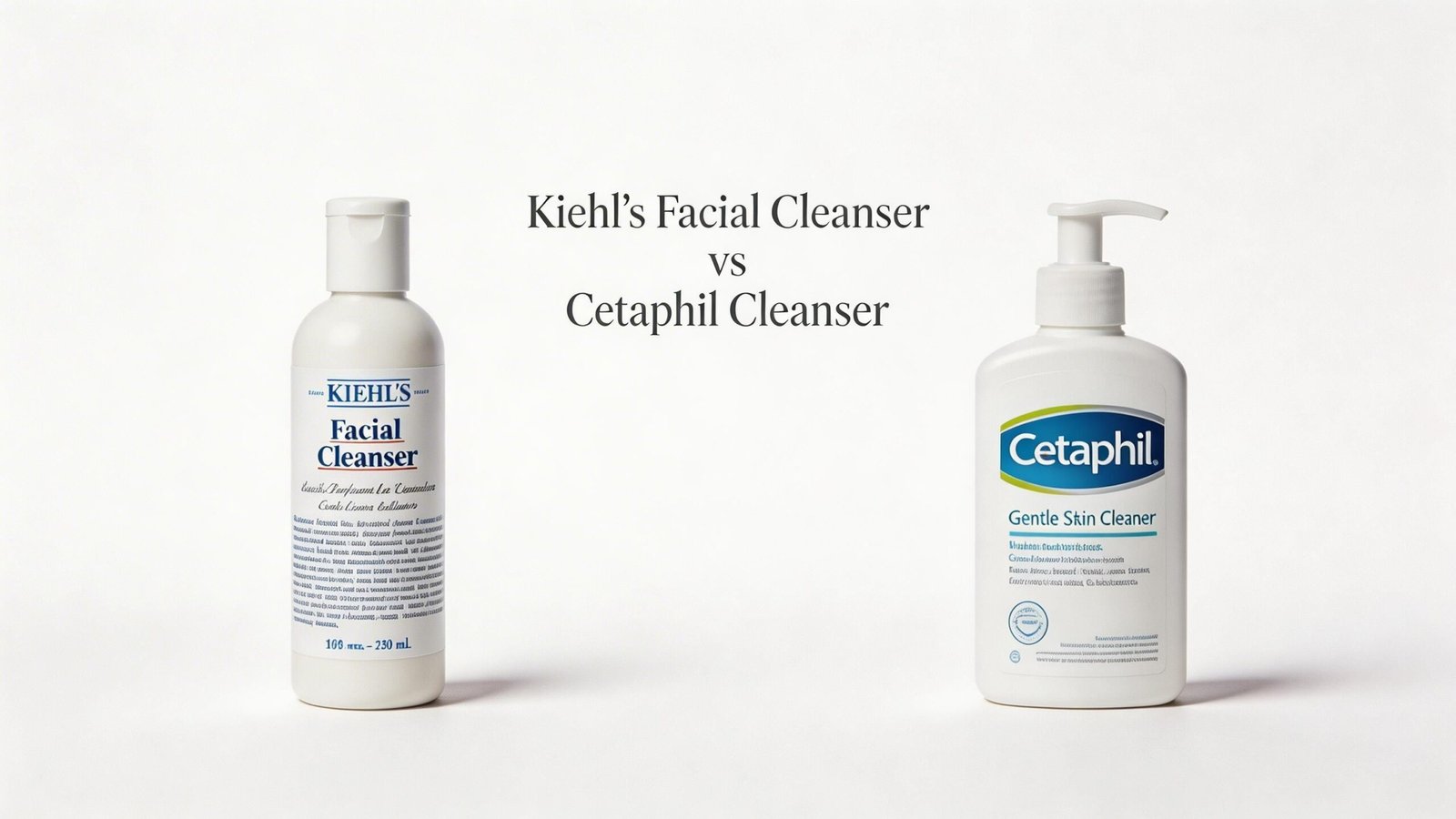
Kiehl’s Facial Cleanser vs Cetaphil Cleanser: Who Wins?
Choosing the right facial cleanser can feel like a real challenge. With so many options on the shelves, two brands consistently stand out — Kiehl’s and Cetaphil. Both have earned loyal followings for good reason. But they serve different skin needs, come at very different price points, and use distinct formulations.
So which one is actually better for your skin? That depends on your skin type, your budget, and what you expect from a daily cleanser.
Kiehl’s brings a premium, ingredient-focused approach rooted in its apothecary heritage. Cetaphil keeps things simple, gentle, and dermatologist-approved at a fraction of the cost.
Key Takeaways
- Kiehl’s cleansers use premium botanical ingredients like calendula, rare earth clays, and amino acids. They target specific skin concerns such as oiliness, dullness, and aging.
- Cetaphil cleansers focus on gentle, no-fuss formulas that work well for sensitive and easily irritated skin. Dermatologists frequently recommend them.
- Price is a major difference. Kiehl’s cleansers typically cost $25 to $45 per bottle. Cetaphil cleansers usually range from $8 to $18 for similar sizes.
- Both brands offer multiple cleanser options. Kiehl’s has specialized formulas for oily, dry, and combination skin. Cetaphil offers gentle, daily, and oil-control variations too.
- Skin type matters most in this decision. If you have reactive or very sensitive skin, Cetaphil is often the safer bet. If you want targeted treatment benefits, Kiehl’s delivers more active ingredients.
- Neither brand is objectively “better.” The right choice depends entirely on your personal skin goals, sensitivity level, and budget.
Kiehl’s Ultra Facial Cleanser

- This mild Cucumber cleanser is uniquely formulated to effectively remove impurities without over-drying skin.
- Gently melts away dirt and impurities for a fresh, clean feeling. Helps maintain skin’s moisture, leaving it conditioned and soft.
Last update on 2026-06-10 / Affiliate links / Images from Amazon Product Advertising API Some of the links on this website are affiliate links, which means that at no additional cost to you, I earn a commission if you click through and make a purchase. I only recommend products and services that I believe will add value to my readers. Thank you for your support!
The Kiehl’s Ultra Facial Cleanser is one of the brand’s most popular products. It uses a gentle gel-to-foam formula that removes dirt and oil without stripping the skin. The key ingredients include Squalane and Apigenin, which help maintain moisture while cleansing.
This cleanser works well for normal to slightly dry skin types. It lathers lightly and rinses clean without leaving any residue. Many users appreciate that their skin feels soft and hydrated after use rather than tight or dry.
The texture is smooth and slightly gel-like. You only need a small amount for each wash. A single bottle lasts most people about two to three months with twice-daily use.
One thing that sets this cleanser apart is its pH-balanced formula. It respects your skin’s natural barrier. This makes it a solid daily cleanser for people who want something effective yet non-aggressive.
Pros:
- Gentle gel-to-foam formula suitable for daily use
- Contains Squalane for added moisture retention
- pH-balanced and does not strip natural oils
- Light, clean scent that is not overpowering
- A little product goes a long way
Cons:
- Higher price point compared to drugstore options
- May not be strong enough for very oily or acne-prone skin
- Limited deep-cleansing power for heavy makeup removal
Cetaphil Gentle Skin Cleanser

- CETAPHIL GENTLE SKIN CLEANSING CLOTHS FOR SENSITIVE SKIN: Leave skin feeling clean and refreshed
- AMERICA'S #1 BEST SELLING FACIAL CLEANSER: Gentle face wash for all skin types; ideal for sensitive, dry skin
Last update on 2026-07-11 / Affiliate links / Images from Amazon Product Advertising API Some of the links on this website are affiliate links, which means that at no additional cost to you, I earn a commission if you click through and make a purchase. I only recommend products and services that I believe will add value to my readers. Thank you for your support!
The Cetaphil Gentle Skin Cleanser has been a drugstore staple for decades. Dermatologists around the world recommend it for sensitive, dry, and easily irritated skin. Its formula is soap-free, fragrance-free, and non-comedogenic.
This cleanser has a unique lotion-like texture. It does not foam at all. You can use it with or without water, which makes it versatile. Many people with eczema, rosacea, and dermatitis rely on this product because it causes minimal irritation.
The ingredient list is intentionally short and simple. Cetaphil avoids unnecessary additives. This minimalist approach reduces the risk of allergic reactions and breakouts caused by harsh chemicals.
It removes surface dirt and light makeup effectively. However, it may not be powerful enough to remove heavy or waterproof makeup on its own. Many users pair it with a makeup remover or cleansing balm for a double-cleanse routine.
Pros:
- Extremely gentle and suitable for very sensitive skin
- Fragrance-free and soap-free formula
- Affordable and widely available at most stores
- Can be used with or without water
- Recommended by dermatologists worldwide
Cons:
- Does not foam, which some users find unsatisfying
- Limited cleansing power for heavy makeup or sunscreen
- Does not contain active treatment ingredients
- Texture may feel slightly filmy on oily skin
Ingredients Comparison
The ingredient philosophy behind these two brands is very different. Kiehl’s leans into botanical extracts, vitamins, and specialty compounds. Cetaphil focuses on clinical simplicity and skin-safe basics.
Kiehl’s Ultra Facial Cleanser contains Squalane, a plant-derived moisturizer that mimics your skin’s natural oils. It also includes Apigenin, derived from chamomile, known for its soothing properties. The formula features gentle surfactants that create a mild lather.
Cetaphil Gentle Skin Cleanser uses a blend of Cetyl Alcohol and Propylene Glycol as its base. These ingredients act as emollients and humectants. They help the skin retain moisture during the cleansing process. The surfactants in Cetaphil are extremely mild and barely create any lather.
If you value active botanical ingredients and a more luxurious feel, Kiehl’s has the edge. If you prioritize a stripped-back formula with minimal risk of irritation, Cetaphil wins that category.
Both cleansers avoid harsh sulfates like Sodium Lauryl Sulfate (SLS). This is a positive sign for both brands. SLS can cause dryness and irritation, especially for people with compromised skin barriers.
Skin Type Suitability
Your skin type should be the biggest factor in this decision. Not every cleanser works the same way on every face.
Kiehl’s Ultra Facial Cleanser suits normal, combination, and slightly dry skin types best. Its hydrating ingredients help balance moisture levels. People with mildly oily skin may also enjoy its light foam action. However, those with very oily or acne-prone skin might prefer a stronger Kiehl’s option like the Rare Earth Deep Pore Cleanser.
Cetaphil Gentle Skin Cleanser shines for sensitive, dry, and reactive skin. If your skin flares up easily from new products, Cetaphil is a safe starting point. It is also an excellent choice for people recovering from chemical peels, laser treatments, or retinoid use.
For combination skin, both products can work. Kiehl’s adds a bit more cleansing action in the T-zone. Cetaphil provides a gentler touch for the drier areas of the face.
If you have mature skin, Kiehl’s may offer slightly more benefit due to its antioxidant-rich formula. The Squalane helps keep aging skin plump and hydrated during cleansing.
Texture and User Experience
How a cleanser feels on your skin matters. It affects whether you actually enjoy using it every day.
Kiehl’s Ultra Facial Cleanser has a clear, gel-like consistency. It transforms into a light foam when you add water and work it between your hands. The lather feels creamy and satisfying. It rinses off easily and leaves skin feeling clean but not tight. Most users describe the experience as refreshing.
Cetaphil Gentle Skin Cleanser has a milky, lotion-like texture. It does not lather or foam at all. You massage it directly onto damp or dry skin and either rinse or wipe it off with a cloth. Some users love this gentle approach. Others find the lack of foam unsatisfying because they associate lather with cleanliness.
The scent also differs. Kiehl’s has a very light, fresh fragrance. Cetaphil is completely fragrance-free. If you have scent sensitivities or prefer unscented products, Cetaphil is the better pick.
Both cleansers feel lightweight on the skin. Neither leaves a heavy or greasy residue. But the sensory experience favors Kiehl’s for those who enjoy a more traditional wash-and-rinse routine.
Price and Value for Money
Let’s talk about your wallet. Price is one of the biggest differences between these two products.
A standard 5 oz bottle of Kiehl’s Ultra Facial Cleanser retails for about $25 to $32. The larger 8.4 oz bottle costs around $35 to $45. These prices reflect the brand’s premium positioning and higher-quality ingredient sourcing.
Cetaphil Gentle Skin Cleanser is much more budget-friendly. A 16 oz bottle typically costs between $10 and $16. That is significantly more product at a much lower cost per ounce. You get roughly four times the volume for half the price.
If you are on a tight budget, Cetaphil offers outstanding value. It does its core job — gentle cleansing — very well without breaking the bank.
However, if you view your cleanser as part of a broader skincare investment, Kiehl’s delivers added benefits. The premium ingredients offer more than just basic cleansing. You pay more, but you get a product that also hydrates and protects your skin during the wash.
For students, teens, or anyone building a simple routine, Cetaphil makes excellent financial sense. For skincare enthusiasts willing to spend more on daily rituals, Kiehl’s feels like a worthy upgrade.
Effectiveness for Acne-Prone Skin
Acne-prone skin requires careful product selection. The wrong cleanser can trigger breakouts or worsen existing ones.
Cetaphil is generally the safer choice for acne-prone skin. Its non-comedogenic, fragrance-free formula reduces the chance of clogged pores. Many dermatologists recommend it as a baseline cleanser for acne treatment plans. It works well alongside prescription acne medications like benzoyl peroxide and tretinoin.
Kiehl’s Ultra Facial Cleanser is also non-comedogenic. But its slightly richer formula may not suit everyone with active acne. For oily, acne-prone skin, Kiehl’s offers a better alternative — the Rare Earth Deep Pore Daily Cleanser — which contains Amazonian White Clay to absorb excess oil.
Neither of these specific cleansers contains salicylic acid or benzoyl peroxide. They are not acne treatment cleansers. They are gentle daily cleansers meant to keep skin clean without causing additional irritation.
If you have mild acne and sensitive skin, Cetaphil pairs well with separate spot treatments. If you have oily skin with occasional breakouts, Kiehl’s provides a slightly deeper clean that can help manage excess sebum.
How Each Brand Handles Dry Skin
Dry skin needs a cleanser that cleans without removing essential moisture. Both products address this, but in different ways.
Kiehl’s Ultra Facial Cleanser contains Squalane, which actively adds moisture back to the skin during cleansing. This ingredient is a standout for dry skin sufferers. Your skin feels soft and supple after rinsing. There is no tightness or flaking.
Cetaphil Gentle Skin Cleanser uses mild emollients and humectants like Propylene Glycol. These ingredients help your skin hold onto its natural moisture. The non-foaming formula is especially gentle on dry patches and flaky areas.
For severely dry skin, Cetaphil has a slight advantage because of its ultra-mild surfactant system. It barely disrupts the skin’s lipid barrier. People with conditions like eczema often find Cetaphil to be one of the only cleansers they can tolerate.
For mildly dry or normal-to-dry skin, Kiehl’s offers a more pleasant and hydrating experience. The Squalane provides a noticeable moisture boost that Cetaphil’s simpler formula does not quite match.
Both brands also offer dedicated dry skin products beyond these specific cleansers. Exploring the full range of each brand can help you find an even more targeted solution.
Long-Term Results and Skin Health
A good cleanser should improve your skin over time, not just clean it in the moment.
Kiehl’s Ultra Facial Cleanser supports long-term skin health through its antioxidant and hydrating ingredients. Regular use helps maintain a balanced moisture barrier. Users often report smoother, more even-toned skin after several weeks of consistent use.
Cetaphil Gentle Skin Cleanser excels at maintaining skin stability. It does not actively treat or transform the skin. Instead, it protects the skin from further irritation and damage. This “do no harm” approach is ideal for people whose skin is already compromised or reactive.
Over months of use, Kiehl’s users often notice a subtle improvement in skin texture and radiance. The botanical ingredients provide cumulative benefits. Cetaphil users tend to notice fewer flare-ups, less redness, and better tolerance for other active products in their routine.
Think of it this way. Kiehl’s is both a cleanser and a mild treatment. Cetaphil is a cleanser and a protective shield. Both approaches work. Your choice depends on whether you want your cleanser to actively improve your skin or simply keep it stable.
Availability and Brand Reputation
Both brands enjoy strong reputations, but they target different audiences.
Kiehl’s started as a New York City apothecary in 1851. The brand is now owned by L’Oréal and sold in department stores, Kiehl’s boutiques, Sephora, and online retailers like Amazon. It positions itself as a premium skincare brand with a focus on natural ingredients and science-backed formulas.
Cetaphil was developed by a pharmacist in 1947. It is owned by Galderma and widely available at drugstores, grocery stores, and online. Cetaphil is positioned as a clinical, dermatologist-recommended skincare brand focused on gentle, effective products for sensitive skin.
Kiehl’s offers a more boutique shopping experience. You can get free samples at their stores. Their packaging feels luxurious. Cetaphil offers pure practicality. The packaging is basic, and the focus is entirely on function.
Both brands have strong online reviews and loyal customer bases. Kiehl’s fans appreciate the premium ingredients and sensory experience. Cetaphil fans value the reliability, affordability, and gentle nature of the products.
You can find both brands easily on Amazon, which makes comparison shopping convenient. Reading verified user reviews on Amazon can also help you gauge real-world performance before you buy.
Sustainability and Ethical Practices
Modern consumers care about more than just skin results. Sustainability and ethics play a growing role in purchase decisions.
Kiehl’s has made significant commitments to sustainability. The brand uses recyclable packaging and runs in-store recycling programs. Many products use responsibly sourced ingredients. Kiehl’s is also Leaping Bunny certified, meaning they do not test on animals.
Cetaphil has also made progress in this area. Galderma has committed to reducing plastic waste and improving packaging sustainability. However, Cetaphil’s cruelty-free status is less clear-cut. The brand sells in markets where animal testing may be required by law, which raises questions for strict cruelty-free shoppers.
If cruelty-free certification is a priority for you, Kiehl’s currently has the stronger credentials. Both brands still have room to improve in areas like plastic reduction and carbon footprint transparency.
Ingredient sourcing is another consideration. Kiehl’s highlights the origins of many of its key botanicals. Cetaphil uses primarily synthetic ingredients, which actually have a lower environmental footprint in some cases because they avoid agricultural land use.
Which Cleanser Should You Choose?
The final answer depends on your unique skin needs and priorities.
Choose Kiehl’s Ultra Facial Cleanser if: you want a premium cleansing experience with added skincare benefits. It suits normal, combination, and mildly dry skin types. It works well for people who enjoy a light foam and fresh scent. It is ideal if you view your cleanser as an active part of your skincare routine rather than just a basic step.
Choose Cetaphil Gentle Skin Cleanser if: you have sensitive, reactive, or very dry skin. It is perfect for people on acne medications or post-procedure recovery. It fits tight budgets without sacrificing quality. It is the go-to option when you need a cleanser that absolutely will not irritate your skin.
You can even use both. Some people use Cetaphil in the morning for a gentle start and Kiehl’s in the evening for a deeper, more hydrating cleanse. There are no rules that say you must stick to one brand.
Ultimately, the best cleanser is the one you will use consistently. Both of these products have earned their reputations. Try samples if possible, pay attention to how your skin responds, and build your routine from there.
Frequently Asked Questions
Is Kiehl’s Ultra Facial Cleanser worth the higher price?
Yes, for many users it is worth the investment. The premium ingredients like Squalane and Apigenin offer real skincare benefits beyond basic cleansing. If your budget allows and you enjoy a more luxurious routine, Kiehl’s delivers noticeable results. However, if basic gentle cleansing is your only goal, Cetaphil accomplishes that at a much lower cost.
Can I use Cetaphil Gentle Skin Cleanser with retinol products?
Absolutely. Cetaphil is one of the most commonly recommended cleansers to pair with retinol and retinoid treatments. Its ultra-gentle formula does not add any extra irritation. This makes it a perfect companion for strong active ingredients that can dry out or sensitize the skin.
Do either of these cleansers remove waterproof makeup?
Neither product is designed for heavy or waterproof makeup removal. Both work well for light makeup and daily grime. For waterproof mascara, foundation, or long-wear products, use a dedicated makeup remover or cleansing oil first. Then follow up with either Kiehl’s or Cetaphil as your second cleanse.
Which cleanser is better for teenage skin?
For most teenagers, Cetaphil is the better starting point. It is affordable, gentle, and hard to misuse. Teen skin can be sensitive and unpredictable. Cetaphil provides a safe, no-frills cleansing option. If a teen has specific concerns like dullness or dryness, Kiehl’s could be a good upgrade later on.
Can I use Kiehl’s and Cetaphil cleansers together in the same routine?
Yes, you can. Many skincare enthusiasts alternate between cleansers based on their skin’s daily needs. You might use Cetaphil on days when your skin feels irritated and Kiehl’s on days when you want extra hydration and a deeper cleanse. Listening to your skin and adjusting is always a smart approach.
Are these cleansers safe for use during pregnancy?
Both Kiehl’s Ultra Facial Cleanser and Cetaphil Gentle Skin Cleanser are generally considered safe for use during pregnancy. They do not contain retinoids, salicylic acid, or other ingredients commonly flagged for pregnant women. However, always check with your healthcare provider before making changes to your skincare routine during pregnancy.

Hi there! I’m Cressida June, the voice behind Echo Insights, where I dive deep into the world of Amazon products to bring you honest, comprehensive reviews across multiple categories.
As a passionate product researcher and reviewer, I believe that every purchase deserves careful consideration. Whether you’re searching for the perfect kitchen gadget, the latest tech innovation, home essentials, or lifestyle products, I’m here to cut through the noise and deliver the insights you need to make informed decisions.